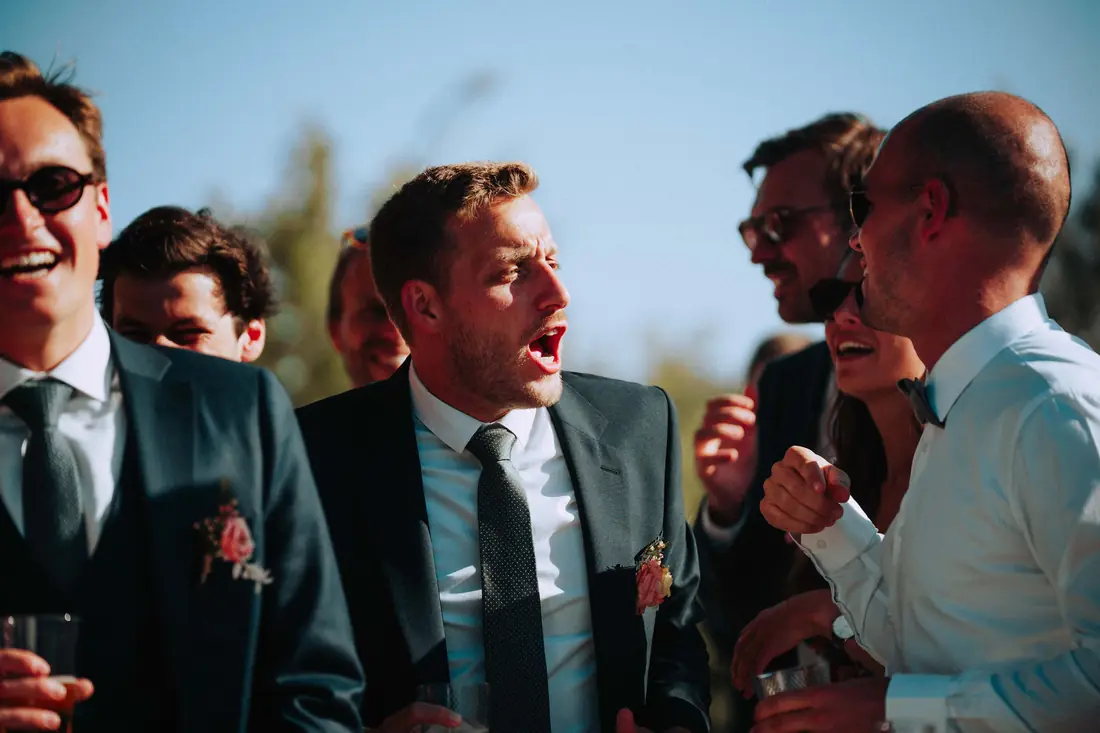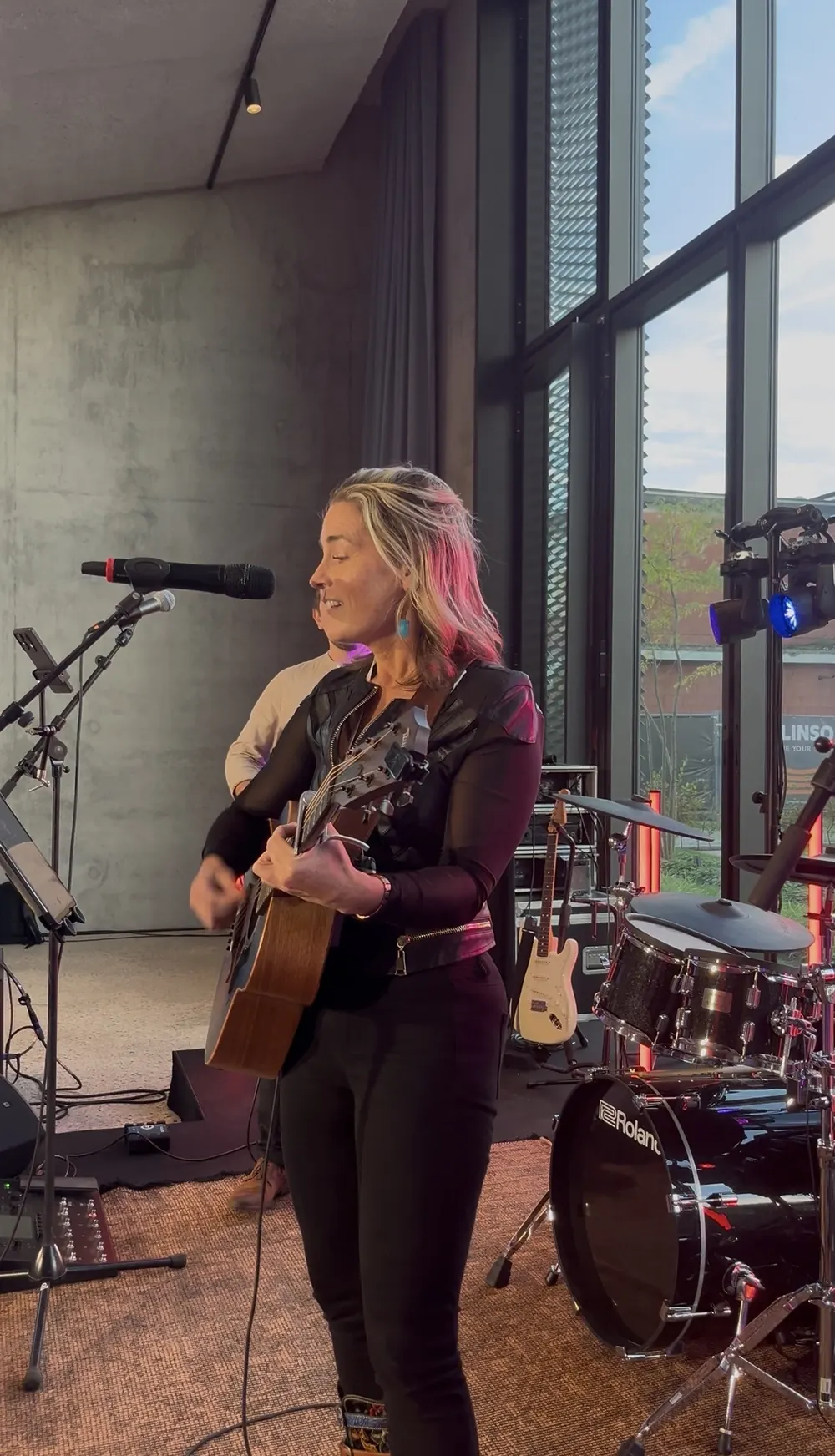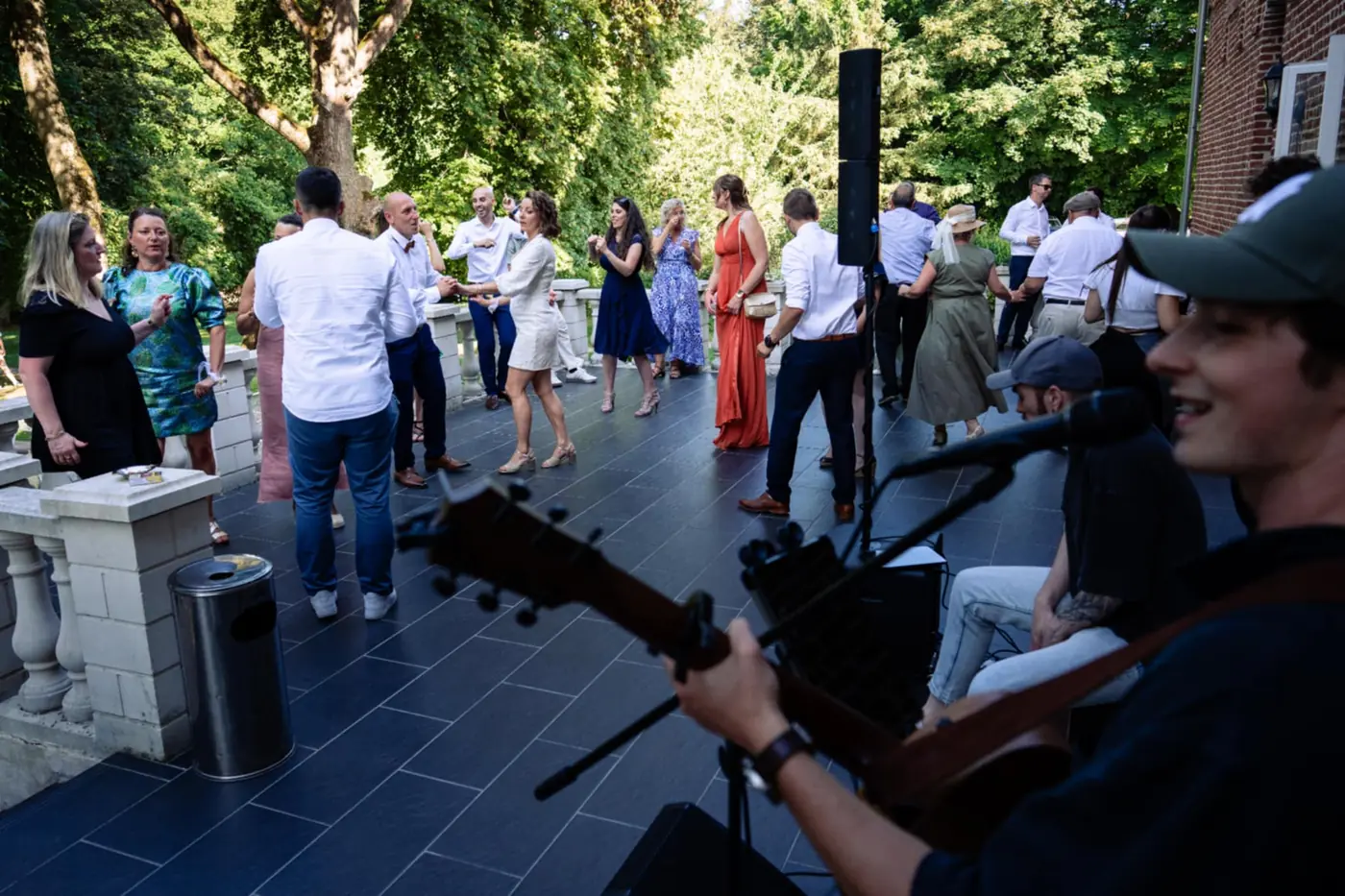
The drinks reception, the French vin d'honneur, is about reunions: the moment guests can finally talk and relax after the ceremony. It is also where live music has the most impact. Here is how we build it.
First, accompany the conversations
A drinks reception usually lasts two to four hours, and we play for about an hour and a half to two hours. At the start, the music creates a warm atmosphere without ever making guests raise their voices. It is a subtle balance: too quiet and it disappears, too loud and it gets in the way. For larger events, we can bring a sound engineer on request to fine-tune that balance in real time.
Then, the finale: 30 minutes that change everything
It is a JamBag institution. Once everyone has had time to talk and grab a drink, we lift the mood for the last thirty minutes before dinner. We invite guests to come closer, get everyone singing, and those who want to start dancing.
This moment is precious for several reasons:
- After your entrance into the dining room, guests will be seated for a long time before they can really dance. This finale gives them a real festive moment, on their feet, in broad daylight.
- It is often the moment older guests enjoy most: they still have all their energy.
- Some guests, less comfortable dancing in the evening, love singing at the drinks reception. It is more a moment for singing than for dancing.
- Because we have everyone's attention, we are the ones who announce dinner. The transition happens naturally, and everything flows.
We talk about this finale with you beforehand. If you would rather the music stays in the background from start to finish, it will. And on the day, we launch it when we feel the crowd is up for it. But when it takes off, it is often one of the most remembered moments of the wedding.
Solo, duo, trio or quartet: no line-up is "better"
It is a matter of taste, not quality. A well-led solo guitar and vocals set can get 300 people singing and dancing: what matters is the ability to create an atmosphere, not the number of musicians. What changes from one line-up to another is the colour:
- Solo: one voice, one guitar, a unique closeness. It fits anywhere, and many guests love this format for being different.
- Duo: percussion drives the rhythm and fills the sound.
- Trio: the bass arrives, and with it the groove. The sound gets richer and more danceable.
- Quartet: drums, the band effect and the chemistry between musicians, for a very dynamic moment.
The more musicians, the fuller the sound and the more visual the "band" effect. But the best way to choose is to see and hear them: our videos show each line-up in action.
Plan all the key moments
A drinks reception goes by very fast, even when it lasts four hours. It would be a shame to lose time to small organisational hiccups. List everything that is planned and share it with the band:
- Group photos: we wait until they are done, and everyone has a glass in hand, before we start, so we are not playing while no one can enjoy it.
- The bouquet toss: we can take our break then, or accompany it with a drum roll.
- Speeches and activities: written into the schedule, they fit in with no gaps or awkward pauses.
Putting everything on paper lets everyone know when to step in, so the finale never gets skipped. We are also there to help you think of everything, and to handle the transitions.
Placement: think about the bar
During a cocktail, guests gather around the bar, drink in hand, and stay there to talk. At that moment, the band has little pull over the crowd: however much it invites people to come closer, they barely move. So place the musicians near where guests will naturally gather, never in a far corner. Send us photos of the venue, and we will choose the spot together.
Songs that work
- Stand by Me, Ben E. King
- Budapest, George Ezra
- Riptide, Vance Joy
- I'm Yours, Jason Mraz
- Three Little Birds, Bob Marley
- Sympathique, Pink Martini
- Les Champs-Élysées, Joe Dassin
- Englishman in New York, Sting
See the full selection in our acoustic cocktail setlist.
Carl, for JamBag